
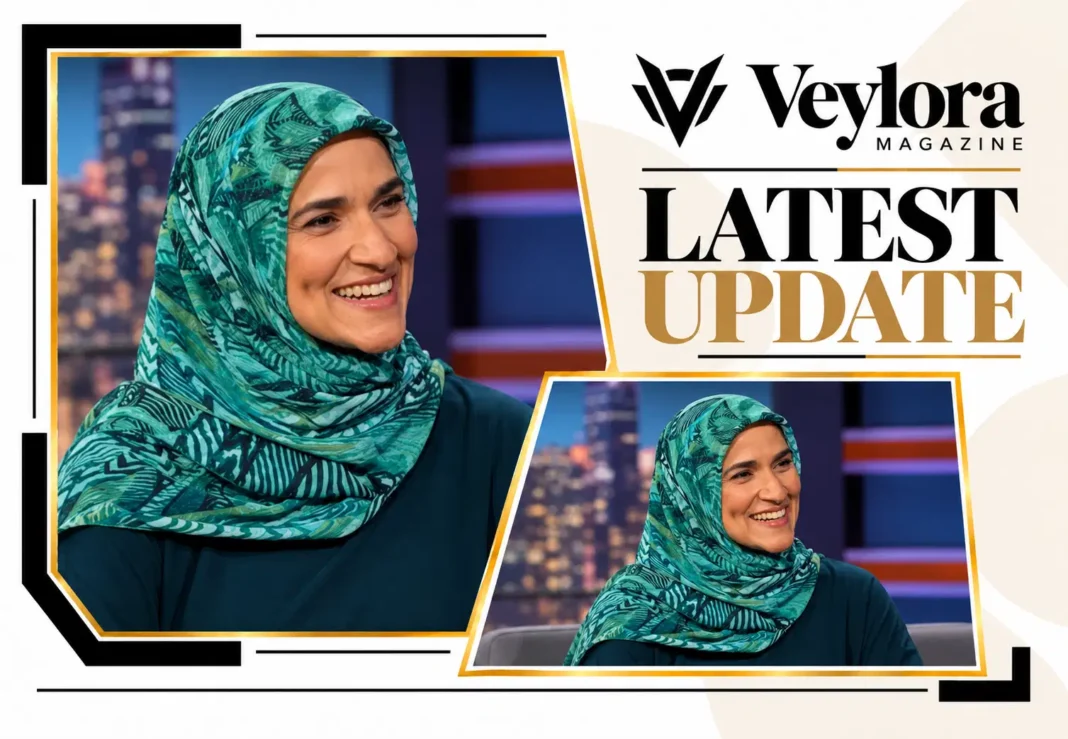
Dalia Asafi is a Canadian private figure best known as the wife of NBA Hall of Famer Hakeem Olajuwon. She married Olajuwon in Houston on August 8, 1996, when she was 18 and he was 33, following an arranged Islamic marriage involving their families. Unlike her husband, Dalia has never built a public career around celebrity, and reliable public information about her childhood, education, work, and finances remains limited.
One documented detail from before the wedding stands out: she planned to study medicine and had received a $1,000 scholarship from Olajuwon’s Dream Foundation before giving it up because foundation rules prevented family members from receiving awards.
Dalia Asafi Quick Facts
| Detail | Publicly established information |
| Full name | Dalia Asafi |
| Best known for | Wife of Hakeem Olajuwon |
| Marriage | August 8, 1996 |
| Marriage location | Houston, Texas |
| Age at marriage | 18 |
| Husband | Hakeem Olajuwon |
| Nationality | Canadian |
| Religion | Muslim |
| Public profession | Not reliably documented |
| Exact birth date | Not publicly established |
| Personal net worth | Not independently verified |
Who Is Dalia Asafi?
Dalia Asafi entered public attention because of her marriage to Hakeem Olajuwon, one of basketball’s most decorated centers. She did not become a celebrity in her own right, and she has largely kept her personal affairs away from interviews, entertainment coverage, and public events. That makes her biography very different from the typical profile of a famous athlete’s spouse.
The strongest public record about Dalia begins around her 1996 marriage. Contemporary reporting identified her as an 18-year-old woman from Houston whose father worshipped at the same mosque as Olajuwon. The reports also established that her family and Olajuwon’s family played a central role in arranging their introduction and marriage.
Much of the information repeated online about Dalia’s childhood remains difficult to verify. Her exact date of birth, detailed schooling history, birthplace, professional career, and personal financial holdings do not have strong public documentation. A careful biography therefore needs to separate established facts from details that have simply circulated across celebrity websites.
Dalia Asafi’s Early Life and Background
Dalia’s early years remain one of the least documented parts of her story. Public reporting from 1996 confirms that she lived in Houston when she married Olajuwon, and it connects her family to the local Muslim community through her father. Beyond those details, reliable records provide little information about her childhood, siblings, schools, or early ambitions.
Her family’s connection to Islam clearly mattered during the period surrounding her marriage. Her father attended the same Houston mosque as Olajuwon, which created the community connection that eventually brought the two families together. That detail gives more context to the marriage without requiring speculation about Dalia’s private upbringing.
Some online biographies have presented specific birth years, Nigerian birthplace claims, ethnic background, and education details as established facts. Reliable public reporting does not provide enough evidence to confirm all of those details, so Dalia’s biography should not treat them as certain. Her Canadian connection, however, has received much stronger confirmation through recent reporting about her sons.
Is Dalia Asafi Canadian?
Yes, recent sports reporting identifies Dalia Asafi as Canadian. Her son Abdul Aziz Olajuwon explained that he was born in Canada, which he described as his mother’s homeland, and he represented Canada at the 2025 FIBA Under-19 Basketball World Cup. That connection provides a much firmer basis for describing Dalia as Canadian than older online claims about her birthplace.
Dalia’s Canadian identity has also influenced another generation of the Olajuwon family. Abdul-Malik Olajuwon, another of Hakeem’s sons, represented Canada at the 2026 FIBA U18 AmeriCup, and Canadian basketball coverage identified his eligibility as coming through his mother. He later committed to Southern Methodist University for college basketball.
This Canadian connection adds an important dimension to Dalia’s family story. Hakeem’s Nigerian roots, Dalia’s Canadian background, and the family’s years connected to the United States and Jordan have given their children a distinctly international upbringing. Their sons’ choices of national teams demonstrate how those different parts of the family identity continue to matter.
Dalia Asafi’s Education and Interest in Medicine
One of the rare details about Dalia’s personal ambitions comes from the period immediately before her wedding. A 1996 report stated that she wanted to study medicine and had received a $1,000 scholarship from Hakeem Olajuwon’s Dream Foundation. The scholarship ultimately had to be relinquished because relatives of people connected with the foundation could not receive its awards.
That episode offers a more concrete picture of Dalia than the generic descriptions found in many celebrity biographies. It shows that she had an educational ambition before her marriage and that she had already secured financial assistance toward that goal. The public record does not establish whether she later attended medical school or pursued medicine professionally.
No reliable public biography provides a complete account of Dalia’s college education. Claims about specific schools or degrees should therefore remain outside a factual profile unless stronger documentation emerges. Her documented interest in medicine remains the clearest publicly reported detail about her educational plans.
How Did Dalia Asafi Meet Hakeem Olajuwon?
Dalia and Hakeem met through their families rather than through a conventional dating relationship. Hakeem had worshipped for years at the same Houston mosque as Dalia’s father, but separate prayer areas for men and women meant that he had not met Dalia or her mother there. Her father later became the link that brought the families together for a formal introduction.
Their introduction followed the Islamic family-arrangement tradition that Hakeem publicly explained at the time. The families met, discussed the proposed union, and allowed Dalia and Hakeem to consider the match within that framework. Contemporary reporting described the eventual wedding as a traditional ceremony and noted that the marriage marked the first marriage for both.
The story matters because it explains why Dalia became Hakeem’s wife without the public courtship that many American audiences expected from a famous athlete. The arrangement reflected the religious and family setting in which both parties participated. Public reporting, however, does not provide Dalia’s own detailed account of how she experienced the process.
Dalia Asafi and Hakeem Olajuwon’s 1996 Marriage
Dalia Asafi married Hakeem Olajuwon on August 8, 1996, in Houston, Texas. She was 18 at the time, while Olajuwon was 33, creating a 15-year age difference that attracted considerable public attention. The ceremony remained private and involved family rather than a large celebrity gathering.
The timing of the wedding also placed Dalia directly alongside one of the biggest periods of Hakeem’s sporting career. He had already led the Houston Rockets to NBA championships in 1994 and 1995, won the 1994 regular-season MVP, captured two Finals MVP awards, and earned two Defensive Player of the Year honors. He also won Olympic gold with the United States in Atlanta in 1996.
The marriage therefore began while Hakeem stood at the height of his international fame. Yet Dalia did not use that attention to create a public celebrity identity. Instead, she remained largely outside the media world surrounding her husband.
Why Did Their Marriage Attract Attention?
The marriage drew attention for two main reasons: Dalia’s age and the family-arranged structure of the union. Contemporary newspapers treated both details as newsworthy because the arrangement differed from the conventional dating culture familiar to many American readers.
There is no well-established public scandal attached to Dalia herself that explains her continued visibility in search results. Instead, interest has centered on the unusual circumstances of the wedding, Hakeem’s celebrity status, their long marriage, and the family they built afterward. Public discussion should therefore distinguish cultural curiosity from claims of wrongdoing.
Their marriage reached its 30th anniversary in August 2026. Three decades together have made the relationship one of the longest-running parts of Hakeem Olajuwon’s public personal history, even though Dalia herself has remained mostly out of view.
Hakeem Olajuwon Before and During His Marriage
Hakeem Olajuwon came from Lagos, Nigeria, and developed into an elite basketball player after beginning the sport as a teenager. He played college basketball at the University of Houston before the Rockets selected him first overall in the 1984 NBA Draft. He eventually spent 18 seasons in the NBA and retired in 2002.
His greatest professional achievements arrived before and shortly after his marriage to Dalia. In 1994, he became the first player to win NBA MVP, Defensive Player of the Year, and Finals MVP during the same season, while leading Houston to its first championship. In 1995, he guided the Rockets to another title and earned a second consecutive Finals MVP.
Olajuwon also remained closely connected to his Muslim faith throughout his career. He observed Ramadan during his playing days and later spent significant time in Jordan, where he and his family embraced an environment that supported their religious and educational priorities. His faith formed an important part of the cultural setting surrounding his marriage to Dalia.
Dalia Asafi, Family Life, and Years in Jordan
After Hakeem retired, the family developed a strong connection to Jordan. A 2011 profile described Olajuwon returning to his wife and seven children in Amman, while other coverage discussed his desire for his children to receive schooling in Jordan and develop English and Arabic skills.
That international family life helps explain why the Olajuwon children later developed connections to several countries. Some pursued Jordanian national basketball, while others represented Canada, reflecting the different parts of their family background. Dalia’s Canadian identity became particularly visible through her sons’ international careers.
The family’s years in Jordan also gave Hakeem a setting where religious practice remained central to everyday life. He discussed prayer, Ramadan, Arabic study, and family life in the country during interviews after his NBA career. Dalia herself did not regularly speak publicly about those years, so the broader family context provides more evidence than any detailed personal account from her.
Dalia Asafi’s Children and Family Legacy
The public record does not provide a consistently complete roster of Dalia and Hakeem’s children. Older reports identified daughters Rahmah and Aisha, while later sports records clearly identify sons Abdullah, Abdulrahman, Abdul Aziz, and Abdul-Malik. A 2011 profile also described Hakeem as living with his wife and seven children, so it would be inaccurate to present a six-name public list as unquestionably complete.
Abdullah Olajuwon
Abdullah Olajuwon became one of the first of Dalia’s sons to attract significant international basketball attention. FIBA lists his birth date as February 11, 2004, and records him as a Jordanian guard who represented Jordan at the 2025 FIBA Asia Cup. He averaged 9 points, 5.3 rebounds, and 1.3 assists across four games in that tournament.
His international debut also carried a personal connection to the family’s basketball history. Abdullah and his younger brother Abdulrahman entered Jordan’s 2025 Asia Cup lineup, creating a new chapter for the Olajuwon name in international basketball. Abdullah discussed the opportunity without treating his father’s legacy as something he needed to copy exactly.
Abdulrahman Olajuwon
Abdulrahman Olajuwon, born December 18, 2005, also represented Jordan at the 2025 FIBA Asia Cup. He stands 203 centimeters tall and played four games during the tournament. His international career gives the family another direct connection to Jordanian basketball.
Abdulrahman’s appearance alongside Abdullah demonstrated how Hakeem’s sons have begun creating basketball identities separate from their father’s playing career. Their routes also contrast with those of their younger brothers, who have pursued Canadian basketball opportunities. That split reflects the international character of the family rather than a single sporting pathway.
Abdul Aziz “Aziz” Olajuwon
Abdul Aziz Olajuwon, widely known as Aziz, has become one of the most visible members of the next Olajuwon generation. He represented Canada at the 2025 FIBA U19 Basketball World Cup, where he averaged 7.6 points and 2.3 rebounds per game across seven appearances. Canada finished fifth in the tournament.
Aziz’s path also provides one of the clearest public links to Dalia’s Canadian identity. He was born in Canada, which he described as his mother’s homeland, and he said his mother felt excited about his opportunity to represent Canada internationally. That gives readers a rare public glimpse of Dalia through her son’s account.
In September 2025, Aziz committed to Stanford after considering several major college programs, including Cincinnati, Vanderbilt, and his father’s alma mater, Houston. By the 2026-27 academic year, he had entered Stanford’s basketball program, giving Dalia another son pursuing high-level basketball in the United States.
Abdul-Malik Olajuwon
Abdul-Malik Olajuwon has emerged as another prominent young basketball prospect in the family. He played for Canada at the 2026 FIBA U18 AmeriCup, helping Canada defeat the United States 67-65 in the championship game while averaging 9.2 points and 3 rebounds across five contests.
On October 1, 2026, Abdul-Malik committed to Southern Methodist University for the 2027 recruiting class. His decision keeps him in Texas, the same state where his father built his college and NBA legacy, although he chose SMU rather than following Hakeem’s University of Houston route.
Abdul-Malik’s Canadian eligibility again traces through his mother. His path shows how Dalia’s Canadian background has influenced more than one child’s sporting opportunities, even though she has never sought publicity through those achievements herself.
Rahmah and Aisha Olajuwon
Rahmah and Aisha remain among the least publicly documented members of the family. A 2000 interview with Hakeem identified both girls and described his intention to raise his daughters within the Muslim faith. Later public coverage provides little dependable information about their education, careers, relationships, or personal interests.
Their limited public presence fits the broader privacy surrounding Dalia’s family life. Unlike their brothers, Rahmah and Aisha have not developed highly visible public sports profiles that require regular media coverage. Their lack of public information does not establish anything about their private achievements or ambitions.
Dalia Asafi’s Stepdaughter, Abi Olajuwon
Hakeem’s family also includes his older daughter, Abisola “Abi” Olajuwon, from his earlier relationship with Lita Spencer. Abi was eight years old when Hakeem married Dalia in 1996, making her Dalia’s stepdaughter rather than her biological daughter.
Abi later created a substantial basketball career of her own. She played at the University of Oklahoma, helped the Sooners reach two Final Fours, earned McDonald’s All-American recognition in high school, and entered the WNBA after the Chicago Sky selected her in the 2010 draft. She later played for the Tulsa Shock and pursued professional basketball overseas.
Her career eventually moved into coaching. Abi worked as an assistant coach at California State University, Fullerton, and later joined Eastern Michigan, continuing a basketball career that moved from playing into player development and recruiting. Her path gives the wider Olajuwon family a second-generation connection to professional and collegiate basketball.
What Does Dalia Asafi Do for a Living?
Dalia Asafi does not have a reliably documented public profession. Many websites describe her as a homemaker, but the public record does not provide a detailed professional biography or direct interview in which she defines her occupation. It is therefore more accurate to describe her as a private person whose public identity centers on family life rather than a confirmed career.
Her documented interest in medicine shows that she had educational ambitions before her marriage. The $1,000 Dream Foundation scholarship also confirms that she had begun pursuing that direction in 1996. Nothing reliable establishes whether she later completed medical education or worked in healthcare, so those possibilities should remain open rather than presented as facts.
Dalia Asafi’s Religion and Family Values
Dalia’s marriage took place within an Islamic family framework, and her connection to Hakeem developed through a mosque community. Hakeem himself maintained a strong Muslim identity throughout his career, including his observance of Ramadan and his later decision to spend significant time in Jordan. Religion therefore formed an important part of the environment in which their family developed.
Hakeem also spoke publicly about raising his children with Islamic values and education. During his years in Jordan, he discussed Arabic study and the advantages of living in a society where Muslim customs shaped daily life. Those comments provide context for the family’s choices without requiring assumptions about Dalia’s private beliefs beyond the Islamic framework documented around her marriage and family.
Is Dalia Asafi on Social Media?
Dalia does not have a widely verified public social-media presence. Accounts using her name cannot automatically establish her identity, particularly because she has maintained such a low public profile for decades. No major public platform currently provides a clearly authenticated account that she uses as an official celebrity or public figure.
Her absence from social media also helps explain why photographs, interviews, and direct personal statements about her remain scarce. Most public information comes through reporting about her marriage or through developments involving her husband and children. That limited visibility makes unsupported claims about her private life especially easy to spread.
Dalia Asafi’s Net Worth
Dalia Asafi’s personal net worth has not been independently established. Online figures attached to her name often borrow from estimates of Hakeem Olajuwon’s wealth, but household wealth and an individual spouse’s personal fortune are not interchangeable. Without verified information about assets, investments, income, or ownership, a precise figure would be speculative.
Hakeem’s financial success clearly created substantial economic resources for the family. His NBA career lasted 18 seasons, and his post-playing life included business and real-estate interests, but those facts still do not establish how much wealth Dalia personally owns. A responsible biography should therefore leave her individual net worth undisclosed.
Dalia Asafi’s Current Life in 2026
As of 2026, Dalia remains largely outside the public spotlight. The strongest recent developments connected to her involve her sons, particularly Aziz’s move into Stanford basketball and Abdul-Malik’s October 2026 commitment to SMU. Those milestones have renewed interest in the woman whose Canadian background forms part of their international sporting identities.
The family’s basketball story now stretches across several generations. Hakeem established the original NBA legacy, Abi moved into professional basketball and coaching, Abdullah and Abdulrahman represented Jordan, and Aziz and Abdul-Malik developed Canadian international careers before pursuing American college opportunities. Dalia remains the quiet family connection behind much of that international story, although she has chosen not to make herself a public personality.
Conclusion
Dalia Asafi’s story stands apart from the usual celebrity-spouse biography because the most reliable facts about her point toward privacy rather than publicity. She married Hakeem Olajuwon on August 8, 1996, at 18, entered a family-arranged Islamic marriage, and remained largely outside the celebrity culture surrounding one of basketball’s greatest players. Her early ambition to study medicine provides one of the few documented glimpses of the woman behind the public name.
Her family history has become more visible as her children have grown into their own careers. Abdullah and Abdulrahman represented Jordan at the 2025 FIBA Asia Cup, Aziz represented Canada at the 2025 FIBA U19 World Cup before joining Stanford, and Abdul-Malik represented Canada before committing to SMU in October 2026. Abi Olajuwon also established her own basketball path through Oklahoma, the WNBA, and coaching.
The clearest picture of Dalia Asafi, then, comes from the intersection of privacy, family, faith, and an international sporting legacy. Her exact birth date, detailed education, professional career, and personal fortune remain unknown, while her Canadian identity and her connection to Hakeem’s family are well supported. After three decades of marriage, Dalia remains an important part of the Olajuwon family story without becoming a public figure herself.
Frequently Asked Questions
Who is Dalia Asafi?
Dalia Asafi is a Canadian private figure best known for her long marriage to NBA Hall of Famer Hakeem Olajuwon, whom she married in Houston in 1996.
How old was Dalia Asafi when she married Hakeem Olajuwon?
Dalia Asafi was 18 when she married Hakeem Olajuwon in August 1996, while Olajuwon was 33 at the time of their Houston wedding.
When did Dalia Asafi marry Hakeem Olajuwon?
Dalia Asafi married Hakeem Olajuwon on August 8, 1996, in Houston, Texas, in a private ceremony involving their families and Islamic marriage traditions.
How did Dalia Asafi and Hakeem Olajuwon meet?
Dalia Asafi and Hakeem Olajuwon met through their families after Hakeem had worshipped at the same Houston mosque as Dalia’s father.
Is Dalia Asafi Canadian?
Yes, recent sports reporting identifies Dalia Asafi as Canadian, and her sons have represented Canada internationally through eligibility connected to their mother.
Does Dalia Asafi have a career?
Dalia Asafi’s current profession has not been reliably documented, although contemporary reporting showed that she planned to study medicine before marrying Hakeem Olajuwon.
What is Dalia Asafi’s net worth?
Dalia Asafi’s personal net worth remains undisclosed because reliable public records do not establish her individual assets, income, investments, or independent financial holdings.
How many children does Dalia Asafi have?
Public reporting documents a large family and identifies several children by name, including Abdullah, Abdulrahman, Aziz, Abdul-Malik, Rahmah, and Aisha, while one child remains publicly unidentified.


[…] Dalia Asafi: Hakeem Olajuwon’s Wife, Family, Life and Story […]